Biting stonecrop
Sedum acre
Family · Crassulaceae · Poisonous
Read this before the sheet
This plant, or one that resembles it, is dangerous. Identifying is not authorising: no app has the authority to tell you that you may eat or touch a plant.
Emergency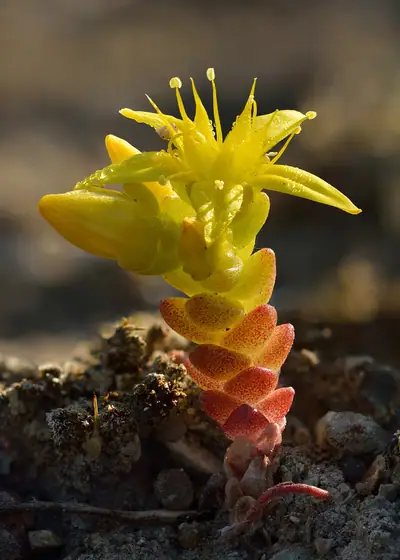
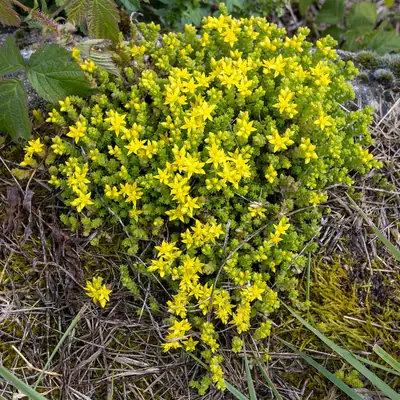


The stonecrop with golden yellow flowers covering walls and fixed dunes in June, its leaves burning the mouth with a peppery taste that gives the name. It is the only one in the group that is seriously toxic.
Walls and rocks · Dunes and sand · Uplands · Town and roadside
Also known asgoldmoss, wallpepper
How to tell it
A low mat of a few centimetres, with very small fleshy leaves, oval and pressed to the stem in a tight spiral, pale green and glossy. Golden yellow flowers with five narrow petals in an open star, in small cymes. The pungent burning taste is the test, and it is the warning itself.
What it is confused with
White stonecrop
Sedum album
Flower colour separates them without room for error: white on white stonecrop, golden yellow on biting stonecrop. Out of flower, biting stonecrop has smaller leaves pressed to the stem. Only the yellow-flowered one is toxic.
What it is for
None
It contains alkaloids that irritate the mouth and gut and cause vomiting, and the sap causes contact dermatitis on sensitive skin. The other wall stonecrops are harmless, this is not, and that is the reason not to put fleshy wall leaves in the mouth without knowing which they are.
Where it occurs
Each square is an area with recorded observations of this plant. The lighter background is the set of areas where any of the entries has been observed, and serves as a reference. Note what this is not: it is not where the plant lives, it is where people record it, so trails and towns always look fuller than the mountains. Data from GBIF.
Sources
Community
No approved contributions for this entry yet.
Nothing appears here without a person reading it first. Contributions do not replace the entry or its warnings: until a botanist confirms, what is written above stands.