Squirting cucumber
Ecballium elaterium
Family · Cucurbitaceae · Poisonous
Read this before the sheet
This plant, or one that resembles it, is dangerous. Identifying is not authorising: no app has the authority to tell you that you may eat or touch a plant.
Emergency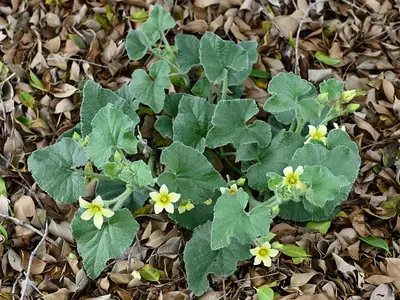


The hairy creeping gourd of southern verges, whose fruit detaches from the stalk and shoots its seeds out in a jet several metres. It is one of the most entertaining plants to show someone and one of the least to touch.
Roadsides and waste ground · Town and roadside · Fields and pasture · Walls and rocks
Also known asexploding cucumber
How to tell it
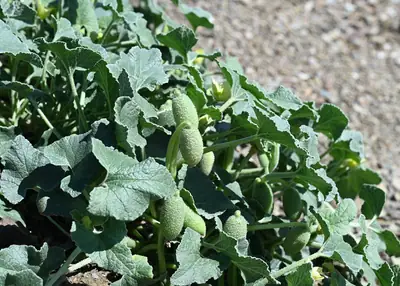
A sprawling plant with no tendrils at all, covered in rough hairs, with large grey-green heart-shaped leaves. Green hairy fruits the size of a walnut, hanging on a thick stalk. Touch a ripe fruit and it fires.
What it is confused with
No dangerous lookalikes known in the Iberian Peninsula.
What it is for
None
The juice is a violent purgative and was used as such in ancient medicine, with recorded deaths. The seed jet reaches the eyes easily and causes chemical conjunctivitis: if it happens, rinse with plenty of water and go to an emergency room.
Where it occurs
Each square is an area with recorded observations of this plant. The lighter background is the set of areas where any of the entries has been observed, and serves as a reference. Note what this is not: it is not where the plant lives, it is where people record it, so trails and towns always look fuller than the mountains. Data from GBIF.
Sources
Community
No approved contributions for this entry yet.
Nothing appears here without a person reading it first. Contributions do not replace the entry or its warnings: until a botanist confirms, what is written above stands.