Cock's-foot
Dactylis glomerata
Family · Poaceae · Harmless

_Ectophasia_crassipennis_on_Dactylis_glomerata.jpg)
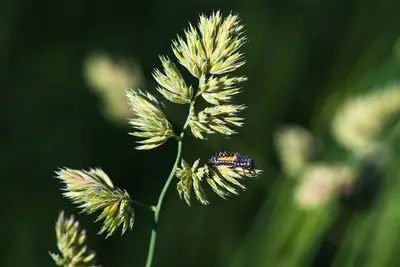
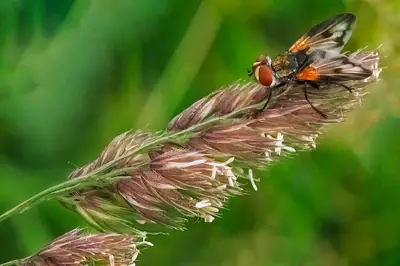
The commonest grass of roadsides and meadows across the peninsula, recognisable by its panicle of tight uneven clusters shaped like a cock's foot. It grows in tussocks and is the base of hay in half the world.
Roadsides and waste ground · Fields and pasture · Oak woods · Uplands · Town and roadside
Also known asorchard grass, cocksfoot
How to tell it
A tussock fifty centimetres to a metre and a half. The stem base is flattened, and the fingers feel it: it rolls badly, unlike round-stemmed grasses. The panicle has few branches, each with a dense knot of spikelets at its tip, all of different sizes and turned the same way. Leaves are broad, greyish green, with a long whitish ligule where blade meets stem.
What it is confused with
No dangerous lookalikes known in the Iberian Peninsula.
What it is for
One of the best forages, sown in meadows and pastures since the eighteenth century. Its pollen is among the worst for spring allergies. No human food use.
Where it occurs
Each square is an area with recorded observations of this plant. The lighter background is the set of areas where any of the entries has been observed, and serves as a reference. Note what this is not: it is not where the plant lives, it is where people record it, so trails and towns always look fuller than the mountains. Data from GBIF.