Mirror orchid
Ophrys speculum
Family · Orchidaceae · Harmless
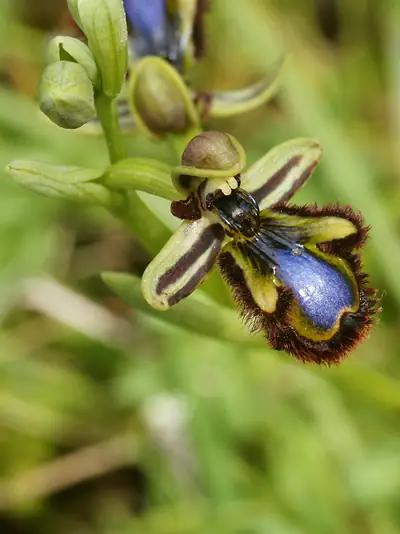
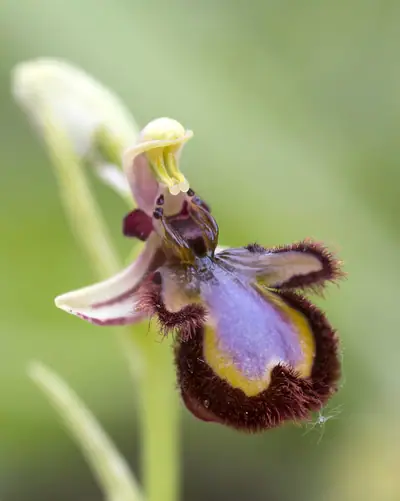


The most spectacular orchid in the Peninsula, and probably the most improbable flower you will meet while walking: a shining metallic blue lip, rimmed with red-brown hairs, mimicking the wings of a female wasp seen from above.
Scrubland · Fields and pasture · Roadsides and waste ground · Montado
Also known asmirror bee orchid, looking-glass orchid
How to tell it
The lip has a central violet-blue patch, smooth and shining like a mirror, ringed by a dense red-brown fringe of hairs. Green sepals with dark stripes. A small plant, ten to thirty centimetres, with few flowers.
What it is confused with
Sombre bee orchid
Ophrys fusca
Both from the same genus and the same scrub. Mirror orchid has the shining blue patch and the red-brown fringe; sombre bee orchid has a velvety brown lip with a dull greyish patch, with no shine at all.
What it is for
None, and that is the point. The flower offers no nectar at all: it deceives males of one specific wasp, which try to mate with it and leave covered in pollen. It is one of the most studied cases of mimicry in the plant world.
The law says
All wild orchids are protected by CITES and by national law. Photograph it; do not pick it or dig up the tuber.
Where it occurs
Each square is an area with recorded observations of this plant. The lighter background is the set of areas where any of the entries has been observed, and serves as a reference. Note what this is not: it is not where the plant lives, it is where people record it, so trails and towns always look fuller than the mountains. Data from GBIF.
Sources
Community
No approved contributions for this entry yet.
Nothing appears here without a person reading it first. Contributions do not replace the entry or its warnings: until a botanist confirms, what is written above stands.