Lampwick plant
Phlomis lychnitis
Family · Lamiaceae · Harmless
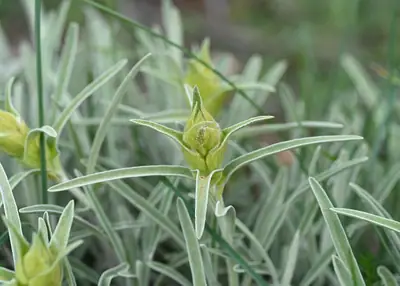
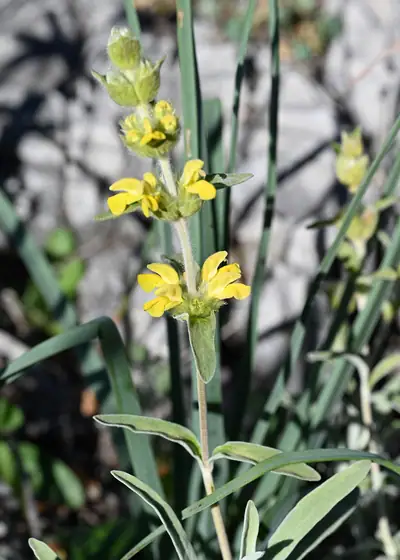


The plant with white felted leaves that fills limestone banks, with yellow flowers in tiers around the stem. The leaves served as lamp wicks for centuries, which is where its Spanish name comes from.
Scrubland · Roadsides and waste ground · Fields and pasture · Uplands
Also known aslampwick sage
How to tell it
Narrow, long leaves covered in white felt-like hairs, soft to the touch. Large yellow flowers in well-separated whorls along the stem. The whole plant looks dusted white.
What it is confused with
No dangerous lookalikes known in the Iberian Peninsula.
What it is for
Wicks for oil lamps, the use that named it in Spanish and that lasted until the countryside was electrified. In folk medicine it was used in infusions and poultices.
With documented traditional uses. Not a therapeutic indication and not a dose.
Where it occurs
Each square is an area with recorded observations of this plant. The lighter background is the set of areas where any of the entries has been observed, and serves as a reference. Note what this is not: it is not where the plant lives, it is where people record it, so trails and towns always look fuller than the mountains. Data from GBIF.
Sources
Community
No approved contributions for this entry yet.
Nothing appears here without a person reading it first. Contributions do not replace the entry or its warnings: until a botanist confirms, what is written above stands.