Cretan mallow
Malva multiflora
Family · Malvaceae · Harmless
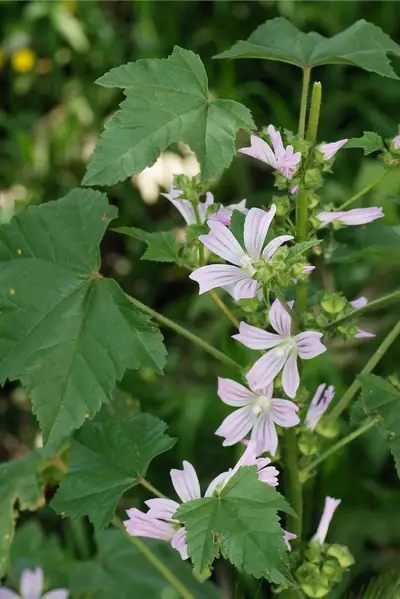
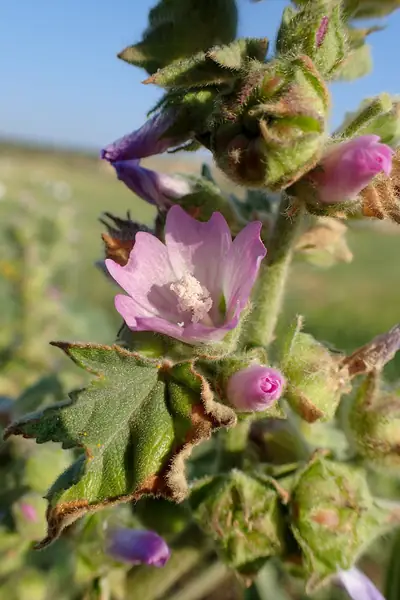


The mallow with tiny pale flowers that goes unnoticed beside common mallow, growing on disturbed ground, rubble and wall bases across the Peninsula.
Town and roadside · Roadsides and waste ground · Fields and pasture · Dunes and sand
Also known assmall-flowered mallow
How to tell it
A prostrate or ascending hairy plant, with round wrinkled leaves of five to seven shallow lobes. Very small flowers, five to ten millimetres, white or pale pink, clustered in bunches at the leaf axils. The fruit is the wheel of segments typical of mallows.
What it is confused with
Common mallow
Malva sylvestris
Common mallow has large flowers, three to four centimetres, purple with dark veins; this has tiny pale flowers in bunches. Both share the same traditional uses.
What it is for
It shares common mallow's traditional uses: leaves cooked in soups and emollient poultices. As in all mallows, the value is in the mucilage, and the use is always the traditional one, in the past.
Traditionally used as food. This is not permission to eat it.
With documented traditional uses. Not a therapeutic indication and not a dose.
Where it occurs
Each square is an area with recorded observations of this plant. The lighter background is the set of areas where any of the entries has been observed, and serves as a reference. Note what this is not: it is not where the plant lives, it is where people record it, so trails and towns always look fuller than the mountains. Data from GBIF.
Sources
Community
No approved contributions for this entry yet.
Nothing appears here without a person reading it first. Contributions do not replace the entry or its warnings: until a botanist confirms, what is written above stands.