Mediterranean honeysuckle
Lonicera implexa
Family · Caprifoliaceae · Irritating
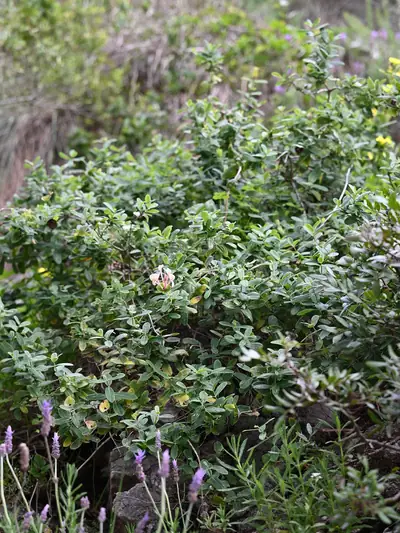
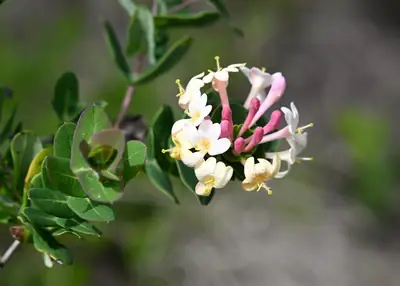


The climber that scents the scrub at dusk, with yellow-pink trumpet flowers all facing the same way. You smell it before you see it, and that is what makes it memorable.
Scrubland · Oak woods · Walls and rocks · Montado
Also known asevergreen honeysuckle
How to tell it
The decisive mark is in the topmost leaves: the last two fuse into a plate around the stem, with the flower emerging from the middle. Opposite, leathery leaves, bluish beneath. Red berries in late summer.
What it is confused with
No dangerous lookalikes known in the Iberian Peninsula.
What it is for
Sucking the nectar from the base of the flower is a childhood game across the Peninsula, and it is safe. The red berries are not: they cause vomiting and diarrhoea, and are among the most recorded childhood poisonings from hedgerows.
Where it occurs
Each square is an area with recorded observations of this plant. The lighter background is the set of areas where any of the entries has been observed, and serves as a reference. Note what this is not: it is not where the plant lives, it is where people record it, so trails and towns always look fuller than the mountains. Data from GBIF.
Sources
Community
No approved contributions for this entry yet.
Nothing appears here without a person reading it first. Contributions do not replace the entry or its warnings: until a botanist confirms, what is written above stands.