Pale flax
Linum bienne
Family · Linaceae · Irritating
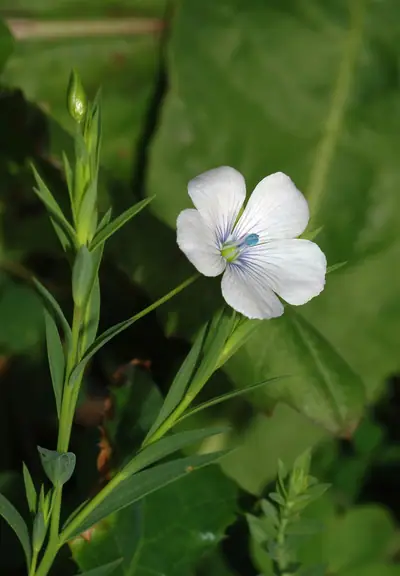
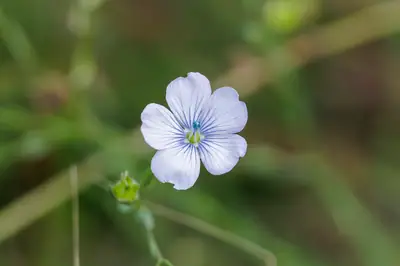


The wild ancestor of cultivated flax, with pale blue or lilac five-petalled flowers that open in the morning and fall by midday. It is on verges and fallow land throughout the Peninsula.
Fields and pasture · Roadsides and waste ground · Scrubland · Dunes and sand
Also known aswild flax, narrow-leaved flax
How to tell it
A slender, much branched plant with almost thread-like stems that are surprisingly hard to snap, which is the family's mark. Narrow alternate leaves with three veins. Pale blue or lilac flowers one to two centimetres. Round capsules with ten shiny seeds.
What it is confused with
Narbonne flax
Linum narbonense
Narbonne flax has intense blue flowers three to four centimetres and is a limestone plant; pale flax has small pale flowers and grows on any soil. Neither is dangerous.
What it is for
It is the origin of textile flax and the stem fibres really are strong, though too short to spin. The seeds contain cyanogenic glycosides like cultivated flax and are not eaten raw in quantity.
Where it occurs
Each square is an area with recorded observations of this plant. The lighter background is the set of areas where any of the entries has been observed, and serves as a reference. Note what this is not: it is not where the plant lives, it is where people record it, so trails and towns always look fuller than the mountains. Data from GBIF.
Sources
Community
No approved contributions for this entry yet.
Nothing appears here without a person reading it first. Contributions do not replace the entry or its warnings: until a botanist confirms, what is written above stands.