Petty spurge
Euphorbia peplus
Family · Euphorbiaceae · Poisonous
Read this before the sheet
This plant, or one that resembles it, is dangerous. Identifying is not authorising: no app has the authority to tell you that you may eat or touch a plant.
Emergency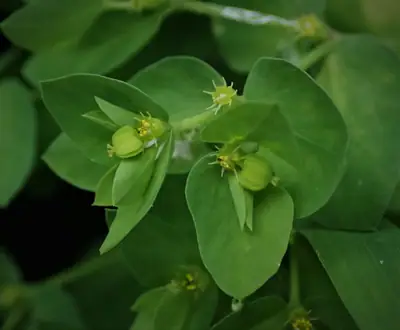
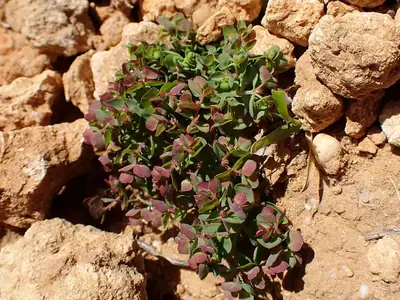


The small pale green spurge that appears in every pot and flowerbed in the country, so ordinary that nobody suspects it. It is the toxic plant closest to the hand of anyone who keeps houseplants.
Town and roadside · Fields and pasture · Roadsides and waste ground
Also known asradium weed, cancer weed
How to tell it
A small, tender, pale green plant with oval leaves, completely smooth-edged, on a short stalk. Three rays at the top, dividing again. White latex from any cut, even the thinnest stems.
What it is confused with
Sun spurge
Euphorbia helioscopia
Count the rays at the top: three here, five on sun spurge. And the leaf: smooth here, toothed at the tip on the other. Both toxic.
What it is for
None at home
A compound extracted from this species was developed into a prescription dermatological medicine for skin lesions, which is the opposite of a licence: the molecule is useful at a controlled dose, and the raw latex burns.
Where it occurs
Each square is an area with recorded observations of this plant. The lighter background is the set of areas where any of the entries has been observed, and serves as a reference. Note what this is not: it is not where the plant lives, it is where people record it, so trails and towns always look fuller than the mountains. Data from GBIF.
Sources
Community
No approved contributions for this entry yet.
Nothing appears here without a person reading it first. Contributions do not replace the entry or its warnings: until a botanist confirms, what is written above stands.