St John's wort
Hypericum perforatum
Family · Hypericaceae · Irritating
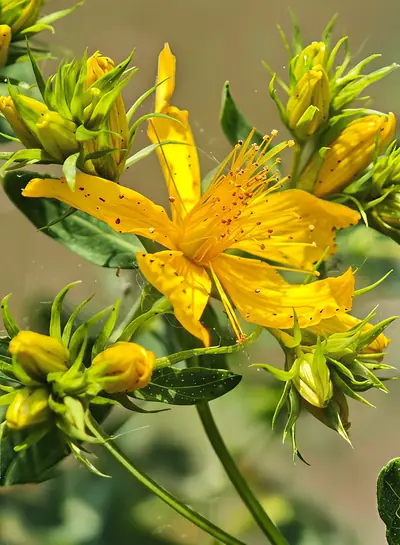
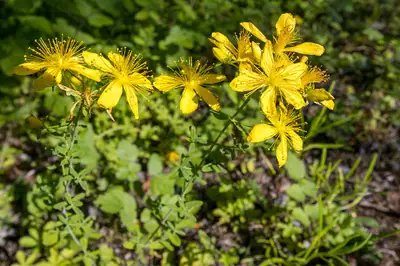


The yellow summer flower with a trick: hold a leaf up to the light and you see hundreds of transparent dots, as if it were pierced. Hence the Portuguese name milfurada.
Roadsides and waste ground · Fields and pasture · Scrubland · Uplands
Also known asperforate St John's wort
How to tell it
A leaf held to the light is full of translucent dots, which are oil glands. Yellow petals with black dots along the edge, and your fingers stain purple if you crush the flower.
What it is confused with
No dangerous lookalikes known in the Iberian Peninsula.
What it is for
A European folk medicine plant with centuries of use, and today the subject of clinical study. Two warnings that belong on the sheet: it photosensitises skin in animals and people, and it interacts with several medicines, including contraceptives. Not something to self-administer.
With documented traditional uses. Not a therapeutic indication and not a dose.
Where it occurs
Each square is an area with recorded observations of this plant. The lighter background is the set of areas where any of the entries has been observed, and serves as a reference. Note what this is not: it is not where the plant lives, it is where people record it, so trails and towns always look fuller than the mountains. Data from GBIF.
Sources
Community
No approved contributions for this entry yet.
Nothing appears here without a person reading it first. Contributions do not replace the entry or its warnings: until a botanist confirms, what is written above stands.