European heliotrope
Heliotropium europaeum
Family · Heliotropiaceae · Poisonous
Read this before the sheet
This plant, or one that resembles it, is dangerous. Identifying is not authorising: no app has the authority to tell you that you may eat or touch a plant.
Emergency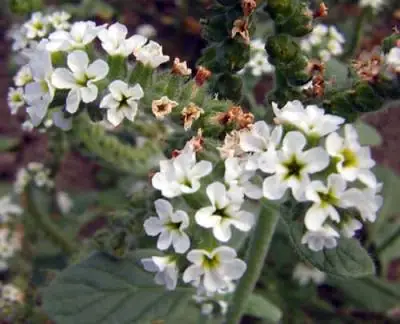
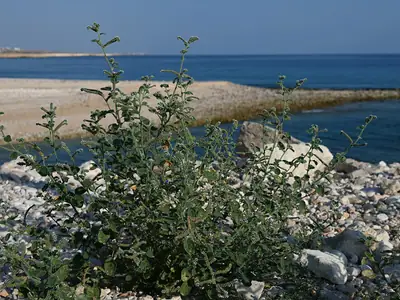


The grey hairy herb with tiny white flowers coiled like a scorpion's tail, appearing in cornfields and dry ground in late summer. It passes for harmless and is liver-toxic.
Fields and pasture · Roadsides and waste ground · Town and roadside
Also known asEuropean turnsole
How to tell it
The whole plant is covered in flattened white hairs, greyish in appearance. Very small white flowers lined along one side of a coiled branch that unrolls as it opens. Oval, soft, wrinkled leaves.
What it is confused with
Blue hound's tongue
Cynoglossum creticum
They are from the same lineage and share the alkaloids and the coiled branch. Heliotrope has tiny white flowers; hound's tongue has blue flowers with dark veins, much larger. Neither is consumed.
What it is for
None
It was applied to warts, hence the name, but what matters today is the other side: it contains pyrrolizidine alkaloids and causes cumulative liver damage. It is a real problem in cereals and fodder, because it contaminates harvested grain.
Where it occurs
Each square is an area with recorded observations of this plant. The lighter background is the set of areas where any of the entries has been observed, and serves as a reference. Note what this is not: it is not where the plant lives, it is where people record it, so trails and towns always look fuller than the mountains. Data from GBIF.
Sources
Community
No approved contributions for this entry yet.
Nothing appears here without a person reading it first. Contributions do not replace the entry or its warnings: until a botanist confirms, what is written above stands.