Onionweed
Asphodelus fistulosus
Family · Asphodelaceae · Harmless
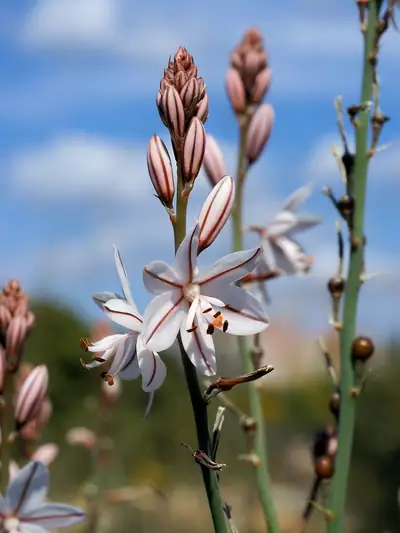
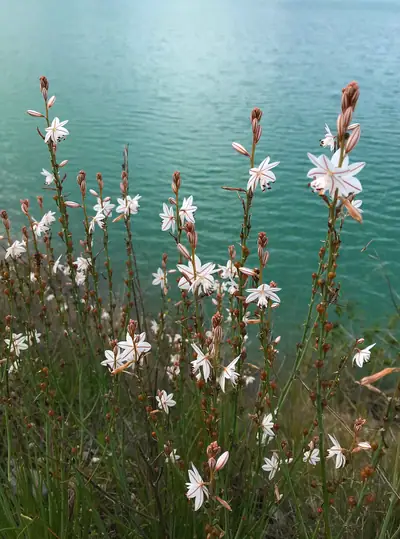


The small asphodel of southern verges, with hollow straw-like leaves and a slender stem of white flowers each petal striped brown. It marks dry, poor, heavily trampled ground.
Roadsides and waste ground · Fields and pasture · Dunes and sand · Scrubland
Also known ashollow-stemmed asphodel, pink asphodel
How to tell it
Basal leaves fine, cylindrical and hollow, like chives, which gives the scientific name. A stem thirty to seventy centimetres tall, far slimmer than the great asphodel's, with white or pinkish six-parted flowers, each piece with a brown or reddish midrib.
What it is confused with
Branched asphodel
Asphodelus ramosus
The great asphodel has broad flat strap leaves and a thick, much branched stem to a metre and a half; this has hollow reed leaves and a slender stem. Neither is eaten.
What it is for
No food use
It is a clear indicator of degraded, overgrazed soil, and is considered an aggressive invader in Australia and the southern United States, where it was taken from the Peninsula.
Where it occurs
Each square is an area with recorded observations of this plant. The lighter background is the set of areas where any of the entries has been observed, and serves as a reference. Note what this is not: it is not where the plant lives, it is where people record it, so trails and towns always look fuller than the mountains. Data from GBIF.
Sources
Community
No approved contributions for this entry yet.
Nothing appears here without a person reading it first. Contributions do not replace the entry or its warnings: until a botanist confirms, what is written above stands.