Bracken
Pteridium aquilinum
Family · Dennstaedtiaceae · Poisonous
Read this before the sheet
This plant, or one that resembles it, is dangerous. Identifying is not authorising: no app has the authority to tell you that you may eat or touch a plant.
Emergency
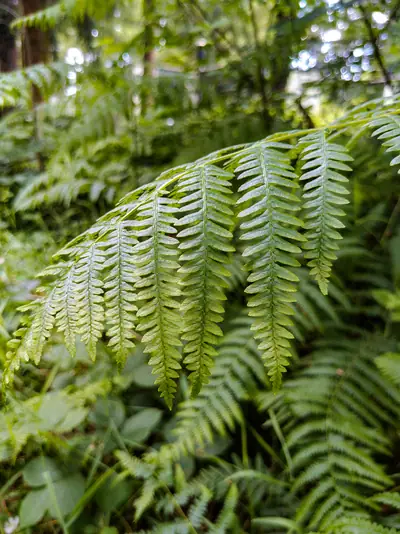


The fern that covers whole slopes in the north and centre and dies back entirely in winter, leaving the hillside rust-coloured. It indicates deep acid soil and farmland abandonment.
Uplands · Oak woods · Scrubland · Pine woods
Also known aseagle fern, brake
How to tell it
A large triangular frond, three times divided, on a single stalk straight out of the ground, with no crown. It does not form a rosette like other ferns: it comes up spaced out, in thousands.
What it is confused with
Royal fern
Osmunda regalis
Royal fern grows in a big crown beside water with broad rounded leaflets; bracken comes up spaced out on dry hillsides with a finely divided triangular frond.
What it is for
Livestock bedding and barn thatch throughout the mountains, and one of the best manures there was. A note that stays on the sheet: it contains ptaquiloside, a proven carcinogen, so it is not eaten nor fed continuously to livestock, unlike what was done in several regions.
Where it occurs
Each square is an area with recorded observations of this plant. The lighter background is the set of areas where any of the entries has been observed, and serves as a reference. Note what this is not: it is not where the plant lives, it is where people record it, so trails and towns always look fuller than the mountains. Data from GBIF.
Sources
Community
No approved contributions for this entry yet.
Nothing appears here without a person reading it first. Contributions do not replace the entry or its warnings: until a botanist confirms, what is written above stands.