Blue gum
Eucalyptus globulus
Family · Myrtaceae · Harmless
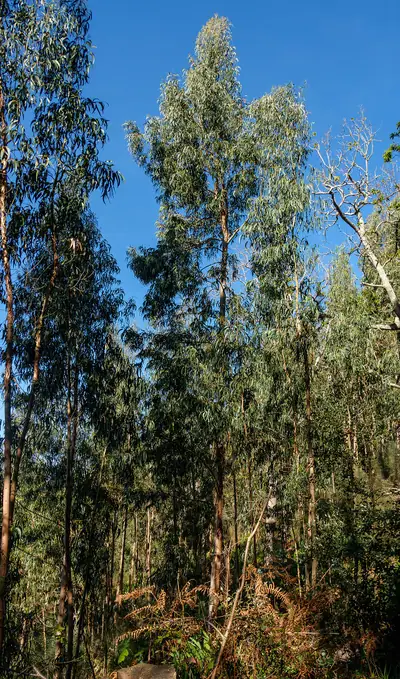
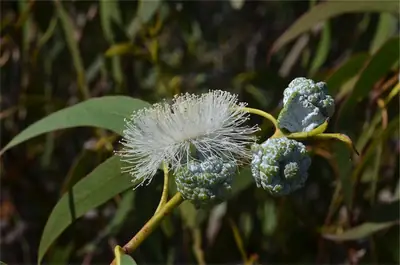


The tree that changed the Portuguese landscape most in the last century, to industry's benefit and the woodland's cost. Australian, fast-growing, violently flammable, and today covering more ground than any native tree.
Pine woods · Uplands · Fields and pasture · Scrubland
Also known asTasmanian blue gum
How to tell it
Bark peeling in long strips, leaving a smooth pale trunk beneath. Juvenile leaves round and bluish, adult leaves sickle-shaped and hanging vertically. Crushed, the leaf smells unmistakably of eucalyptus.
What it is confused with
No dangerous lookalikes known in the Iberian Peninsula.
What it is for
Paper pulp, which is why it is here in the millions. The essential oil is used in inhalations, a traditional use that replaces no treatment. Fallen leaves suppress the growth of other plants beneath.
The law says
An invasive species with its own regime in Portugal: new plantations have been legally restricted since 2017. Not a species to propagate.
Where it occurs
Each square is an area with recorded observations of this plant. The lighter background is the set of areas where any of the entries has been observed, and serves as a reference. Note what this is not: it is not where the plant lives, it is where people record it, so trails and towns always look fuller than the mountains. Data from GBIF.
Sources
Community
No approved contributions for this entry yet.
Nothing appears here without a person reading it first. Contributions do not replace the entry or its warnings: until a botanist confirms, what is written above stands.