Black nightshade
Solanum nigrum
Family · Solanaceae · Poisonous
Read this before the sheet
This plant, or one that resembles it, is dangerous. Identifying is not authorising: no app has the authority to tell you that you may eat or touch a plant.
Emergency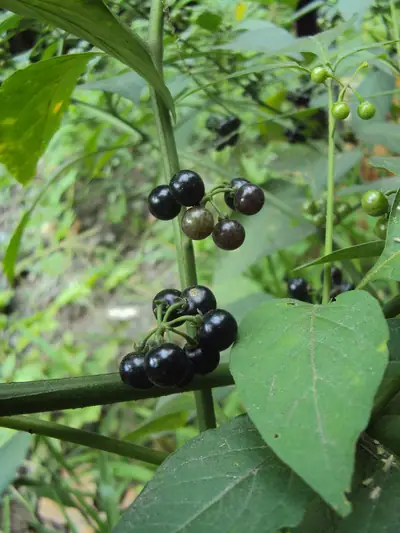
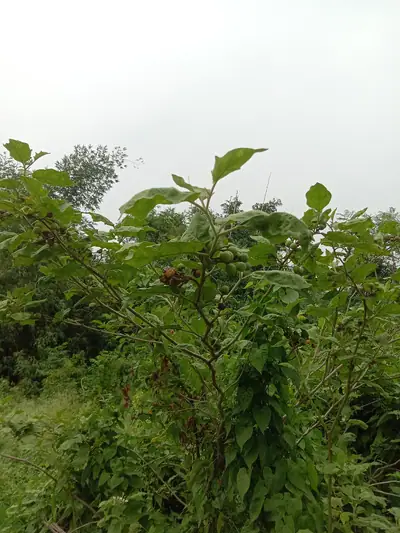


The garden weed with tiny white tomato-like flowers and pea-sized black berries. It is the most common toxic plant in the country's gardens and urban beds.
Town and roadside · Fields and pasture · Roadsides and waste ground
Also known asblackberry nightshade
How to tell it
A five-pointed white flower with a yellow cone centre, like a tomato's but small. Green berries turning glossy black, in hanging clusters. A soft plant with no spines.
What it is confused with
No dangerous lookalikes known in the Iberian Peninsula.
What it is for
None here
There are parts of the world where varieties of this species are eaten cooked, but European populations contain unpredictable amounts of solanine, especially in green berries. Not a plant for experiments.
Where it occurs
Each square is an area with recorded observations of this plant. The lighter background is the set of areas where any of the entries has been observed, and serves as a reference. Note what this is not: it is not where the plant lives, it is where people record it, so trails and towns always look fuller than the mountains. Data from GBIF.
Sources
Community
No approved contributions for this entry yet.
Nothing appears here without a person reading it first. Contributions do not replace the entry or its warnings: until a botanist confirms, what is written above stands.