Field woundwort
Stachys arvensis
Family · Lamiaceae · Harmless
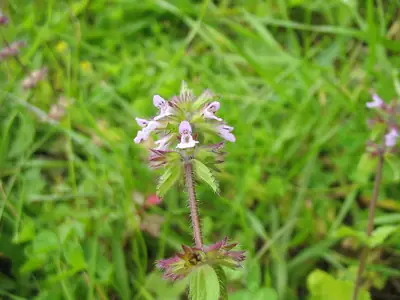
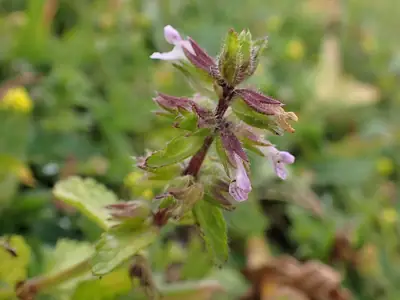


The most discreet mint relative of every garden, with pale pink flowers of a few millimetres hidden in the leaf axils. It is in almost every bed in the Peninsula and nobody notices it.
Fields and pasture · Town and roadside · Roadsides and waste ground
Also known asstaggerweed
How to tell it
A small hairy annual with a four-angled stem, often prostrate. Opposite heart-shaped leaves, stalked, with rounded teeth. Pale pink or nearly white flowers three to six millimetres, in whorls of two to six at the axils. It smells of nothing, which is unusual in the family.
What it is confused with
No dangerous lookalikes known in the Iberian Peninsula.
What it is for
No relevant use
It is worth it as proof that not every mint relative smells: the four-angled stem and opposite leaves still identify the family even when the nose does not help.
Where it occurs
Each square is an area with recorded observations of this plant. The lighter background is the set of areas where any of the entries has been observed, and serves as a reference. Note what this is not: it is not where the plant lives, it is where people record it, so trails and towns always look fuller than the mountains. Data from GBIF.
Sources
Community
No approved contributions for this entry yet.
Nothing appears here without a person reading it first. Contributions do not replace the entry or its warnings: until a botanist confirms, what is written above stands.