Herb Robert
Geranium robertianum
Family · Geraniaceae · Harmless
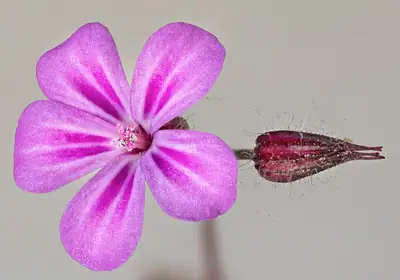
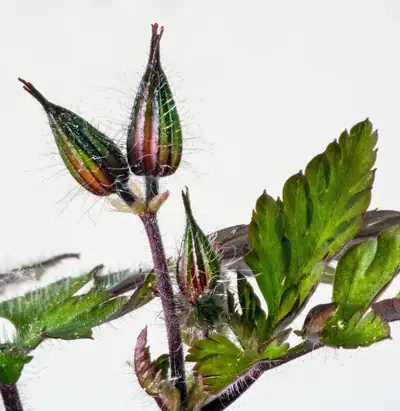


The shade geranium that turns entirely red at the end of the season and smells bad when touched. It is among the commonest plants in a damp wood and one that more people have crushed without knowing its name.
Oak woods · Walls and rocks · Streams and ditches · Uplands
Also known asred robin, death come quickly
How to tell it
Red, brittle, hairy stems that break at the slightest touch. Leaves divided into five segments, each cut again, on a long stalk. Bright pink five-petalled flowers with paler stripes. A strong unpleasant smell when rubbed, which many people recognise without knowing from where.
What it is confused with
Little Robin
Geranium purpureum
They are nearly identical and share the name. The difference is in the anthers: yellow on the lesser one, orange or reddish here. The lesser prefers drier southern places, this damp woodland. Both harmless.
What it is for
Traditional external use on wounds and inflammations across Europe, and one of the most cited medicinal plants in European ethnobotany. No food use.
With documented traditional uses. Not a therapeutic indication and not a dose.
Where it occurs
Each square is an area with recorded observations of this plant. The lighter background is the set of areas where any of the entries has been observed, and serves as a reference. Note what this is not: it is not where the plant lives, it is where people record it, so trails and towns always look fuller than the mountains. Data from GBIF.
Sources
Community
No approved contributions for this entry yet.
Nothing appears here without a person reading it first. Contributions do not replace the entry or its warnings: until a botanist confirms, what is written above stands.