Intermediate periwinkle
Vinca difformis
Family · Apocynaceae · Poisonous
Read this before the sheet
This plant, or one that resembles it, is dangerous. Identifying is not authorising: no app has the authority to tell you that you may eat or touch a plant.
Emergency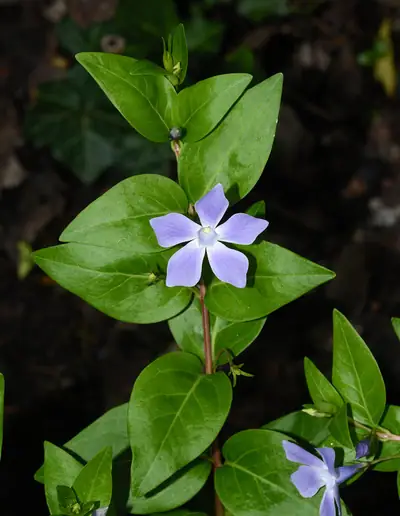
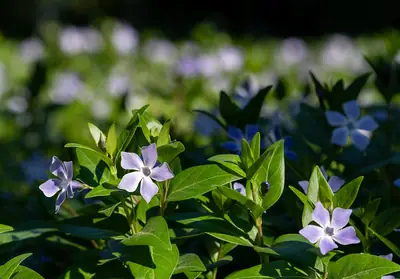


The low creeper with pale blue propeller flowers that blooms in midwinter on shady banks and damp margins. It forms dense mats where nothing else grows, and it is toxic.
Streams and ditches · Oak woods · Walls and rocks · Town and roadside
Also known asperiwinkle
How to tell it
Opposite, leathery, dark glossy evergreen leaves. Pale blue or lilac flowers with five asymmetric petals, twisted like propeller blades. Long stems that root where they touch the ground. Milky latex when broken.
What it is confused with
Oleander
Nerium oleander
Same family, both with latex and both toxic. Oleander is a big upright shrub with leaves in threes; periwinkle is prostrate with leaves in opposite pairs.
What it is for
None at home
The family contains alkaloids used in oncology, extracted in a laboratory and given at an exact dose, which is the opposite of a licence. Eaten, the plant causes vomiting, a drop in blood pressure and blood disorders.
With documented traditional uses. Not a therapeutic indication and not a dose.
Where it occurs
Each square is an area with recorded observations of this plant. The lighter background is the set of areas where any of the entries has been observed, and serves as a reference. Note what this is not: it is not where the plant lives, it is where people record it, so trails and towns always look fuller than the mountains. Data from GBIF.
Sources
Community
No approved contributions for this entry yet.
Nothing appears here without a person reading it first. Contributions do not replace the entry or its warnings: until a botanist confirms, what is written above stands.