Creeping cinquefoil
Potentilla reptans
Family · Rosaceae · Harmless
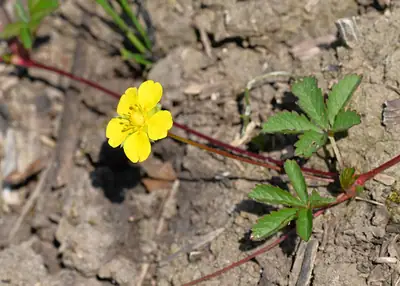
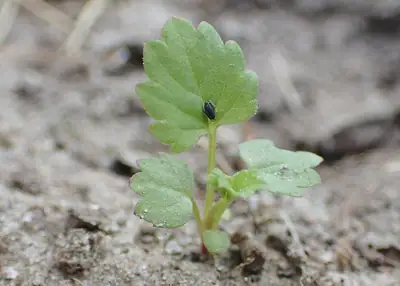


The creeper with five-petalled yellow flowers that spreads across damp lawns and verges, running along the ground on threads that root every metre. It was a plant of witchcraft and pharmacy, and today is mostly a lawn weed.
Fields and pasture · Roadsides and waste ground · Streams and ditches · Town and roadside
Also known asfive-leaf grass, creeping tormentil
How to tell it
Five toothed leaflets radiating from a single point, like the fingers of an open hand. Solitary yellow five-petalled flowers on a long stalk from the axil. Long runners along the ground.
What it is confused with
Wild strawberry
Fragaria vesca
Count the leaflets and look at flower colour: five leaflets and a yellow flower here, three leaflets and a white flower on wild strawberry. The mistake has no consequence, but it yields no strawberries either.
What it is for
An astringent root traditionally used in gargles and on wounds in European folk medicine. No relevant food use.
With documented traditional uses. Not a therapeutic indication and not a dose.
Where it occurs
Each square is an area with recorded observations of this plant. The lighter background is the set of areas where any of the entries has been observed, and serves as a reference. Note what this is not: it is not where the plant lives, it is where people record it, so trails and towns always look fuller than the mountains. Data from GBIF.
Sources
Community
No approved contributions for this entry yet.
Nothing appears here without a person reading it first. Contributions do not replace the entry or its warnings: until a botanist confirms, what is written above stands.