Black poplar
Populus nigra
Family · Salicaceae · Harmless
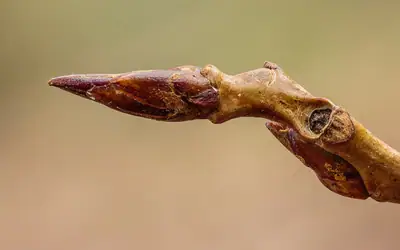



The tree that marks inland rivers and irrigation lines, often planted in rows as a windbreak. The narrow upright form seen along roads is a variety, the Lombardy poplar, propagated by cuttings for centuries.
Streams and ditches · Fields and pasture · Roadsides and waste ground
Also known asLombardy poplar
How to tell it
A diamond or triangular leaf with a sharp tip and finely toothed margin, green on both sides. The stalk is long and flattened, which makes the leaf tremble in the least wind and gives a poplar stand its characteristic sound. Dark, deeply cracked bark.
What it is confused with
White poplar
Populus alba
Turn the leaf over: white poplar's is white-felted beneath and looks silver from afar in the wind; black poplar's is green on both sides.
What it is for
Light timber for boxes and pulp, and shade on irrigated land. Cuttings root almost always, which is why a row of poplars is usually someone's work rather than chance.
Where it occurs
Each square is an area with recorded observations of this plant. The lighter background is the set of areas where any of the entries has been observed, and serves as a reference. Note what this is not: it is not where the plant lives, it is where people record it, so trails and towns always look fuller than the mountains. Data from GBIF.
Sources
Community
No approved contributions for this entry yet.
Nothing appears here without a person reading it first. Contributions do not replace the entry or its warnings: until a botanist confirms, what is written above stands.