Wall barley
Hordeum murinum
Family · Poaceae · Irritating
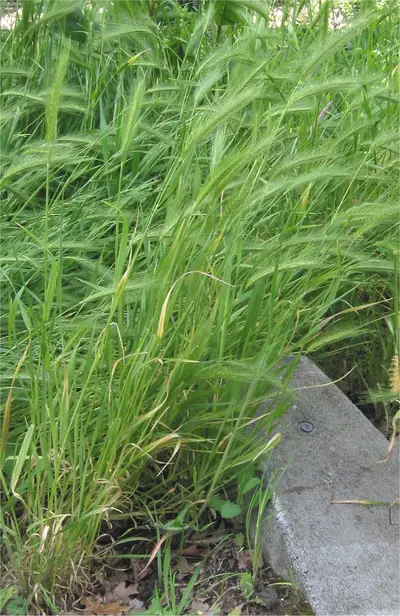
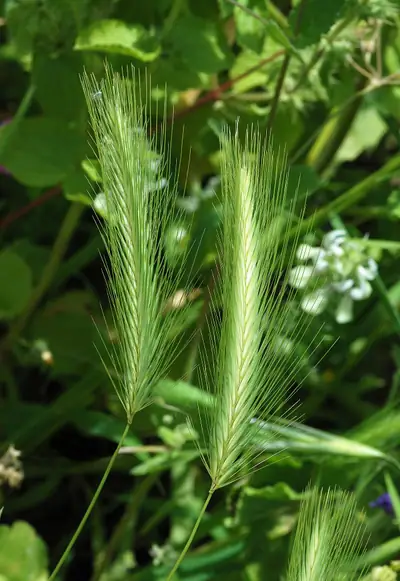


The long-awned spike that fills roadsides and wall bases in towns, and that children throw at each other's backs because it clings to clothes. Those same awns work into dogs' paws, ears and noses and are a frequent reason for a vet visit.
Roadsides and waste ground · Town and roadside · Walls and rocks · Fields and pasture
Also known asmouse barley, false barley
How to tell it
Twenty to fifty centimetres, in tufts. The spike is dense, green then straw-coloured, two to five centimetres long, with straight awns two to three centimetres from each spikelet, all pointing up and out. When dry, the spike breaks into units with microscopic backward-facing barbs: they go in easily and do not come out on their own.
What it is confused with
No dangerous lookalikes known in the Iberian Peninsula.
What it is for
No use. Anyone walking dogs in late spring should check paws, ears and between the toes after passing dry verges, which is when these spikes shed.
Where it occurs
Each square is an area with recorded observations of this plant. The lighter background is the set of areas where any of the entries has been observed, and serves as a reference. Note what this is not: it is not where the plant lives, it is where people record it, so trails and towns always look fuller than the mountains. Data from GBIF.