Haller's sedge
Carex halleriana
Family · Cyperaceae · Harmless
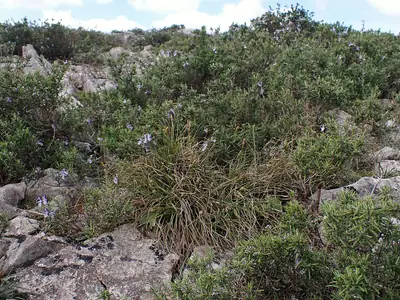
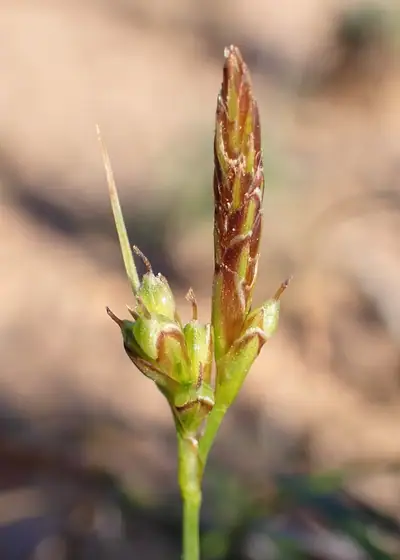


The small stubborn sedge of dry limestone, flowering early, in March, when almost nothing else is in flower in the scrub. It is one of the few that hides spikes at ground level, buried at the base of the tussock.
Scrubland · Uplands · Oak woods · Walls and rocks
Also known asgrey sedge
How to tell it
A dense tussock ten to thirty centimetres, with narrow hard leaves. Like all sedges, the stem is triangular in section: roll it between your fingers and you feel three edges, unlike grasses, which are round. It has a slender male spike at the top and two or three short female ones below, plus others hidden at ground level, a sign almost no other sedge shares.
What it is confused with
No dangerous lookalikes known in the Iberian Peninsula.
What it is for
No use. It indicates limestone and dry stony soil.
Where it occurs
Each square is an area with recorded observations of this plant. The lighter background is the set of areas where any of the entries has been observed, and serves as a reference. Note what this is not: it is not where the plant lives, it is where people record it, so trails and towns always look fuller than the mountains. Data from GBIF.