Wild teasel
Dipsacus fullonum
Family · Caprifoliaceae · Irritating
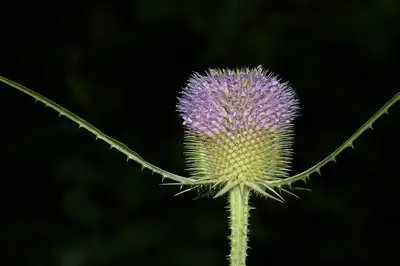
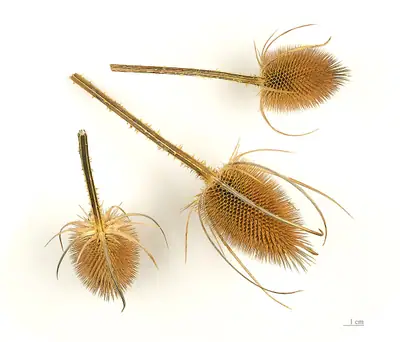


The tall stem with a spiny oval head where lilac flowers open in a ring that travels up and down over weeks. The leaves fuse round the stem and form cups that collect rainwater.
Streams and ditches · Roadsides and waste ground · Fields and pasture · Town and roadside
Also known asfuller's teasel, common teasel
How to tell it
An upright stem to two metres, with spines along the ridges. Opposite leaves fused to each other at the base, forming a cup round the stem that collects water. An oval head five to eight centimetres, covered in needle bracts, with a ring of pale lilac flowers opening at a time. The dry head stands all winter.
What it is confused with
No dangerous lookalikes known in the Iberian Peninsula.
What it is for
The dried heads were the fullers' tool for carding wool for centuries, mounted on drums, and no machine replaced them well until the twentieth century. No food use. The seeds are winter food for goldfinches.
Where it occurs
Each square is an area with recorded observations of this plant. The lighter background is the set of areas where any of the entries has been observed, and serves as a reference. Note what this is not: it is not where the plant lives, it is where people record it, so trails and towns always look fuller than the mountains. Data from GBIF.
Sources
Community
No approved contributions for this entry yet.
Nothing appears here without a person reading it first. Contributions do not replace the entry or its warnings: until a botanist confirms, what is written above stands.