Box
Buxus sempervirens
Family · Buxaceae · Poisonous
Read this before the sheet
This plant, or one that resembles it, is dangerous. Identifying is not authorising: no app has the authority to tell you that you may eat or touch a plant.
Emergency
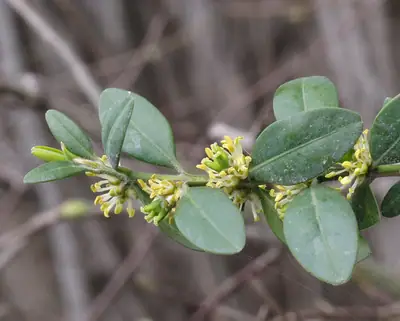


The small-leaved evergreen of clipped garden hedges, which in the Peninsula is also a wild plant of limestone slopes. The wood is so dense it sinks in water, and the whole plant is toxic.
Uplands · Oak woods · Walls and rocks
Also known ascommon box, boxwood
How to tell it
Small, opposite, leathery, dark glossy leaves with a notch at the tip. Four-angled twigs. A characteristic unpleasant smell when cut, which many people recognise from old gardens.
What it is confused with
No dangerous lookalikes known in the Iberian Peninsula.
What it is for
Dense, uniform wood for precision pieces, engraving and musical instruments. No food use: it contains alkaloids causing vomiting, convulsions and, at high dose, respiratory arrest, and there are poisonings of livestock that eat hedge clippings.
Where it occurs
Each square is an area with recorded observations of this plant. The lighter background is the set of areas where any of the entries has been observed, and serves as a reference. Note what this is not: it is not where the plant lives, it is where people record it, so trails and towns always look fuller than the mountains. Data from GBIF.
Sources
Community
No approved contributions for this entry yet.
Nothing appears here without a person reading it first. Contributions do not replace the entry or its warnings: until a botanist confirms, what is written above stands.