Greater quaking grass
Briza maxima
Family · Poaceae · Harmless
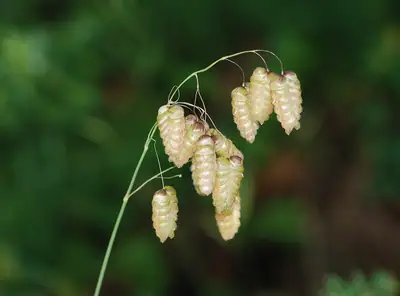
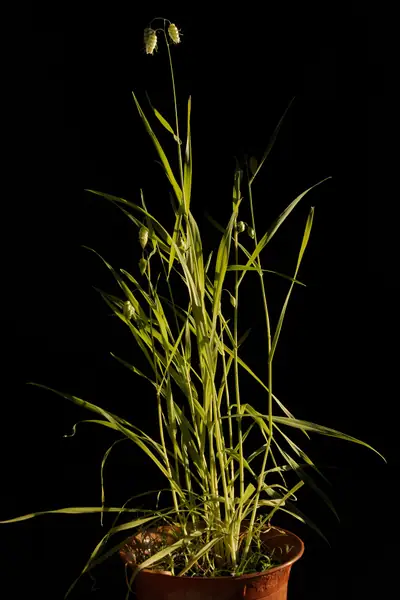


The grass with big flattened spikelets that tremble in the slightest breeze, hanging from hair-thin stalks. It is the only one in the genus with spikelets the size of a fingernail, which makes it one of the few grasses anyone recognises at first sight.
Roadsides and waste ground · Fields and pasture · Scrubland · Walls and rocks
Also known aslarge quaking grass, rattlesnake grass
How to tell it
An annual grass twenty to sixty centimetres tall. The spikelets are one to two centimetres, oval and flattened, made of overlapping scales like roof tiles, green with a pale edge and later golden or purplish. Each hangs from a stalk so thin that the slightest breeze sets them rattling. There are five to twelve per plant, which separates it from its small sister Briza minor, with dozens of tiny spikelets.
What it is confused with
Lesser quaking grass
Briza minor
The lesser one has spikelets the size of a rice grain, many dozens per plant, in an open airy panicle. The greater has few and large ones. Neither is dangerous.
What it is for
No food use. It is picked dry for arrangements, and is one of the few grasses children learn to name. In dry fields it indicates poor, little-trampled soil.
Where it occurs
Each square is an area with recorded observations of this plant. The lighter background is the set of areas where any of the entries has been observed, and serves as a reference. Note what this is not: it is not where the plant lives, it is where people record it, so trails and towns always look fuller than the mountains. Data from GBIF.