Perennial ryegrass
Lolium perenne
Family · Poaceae · Harmless
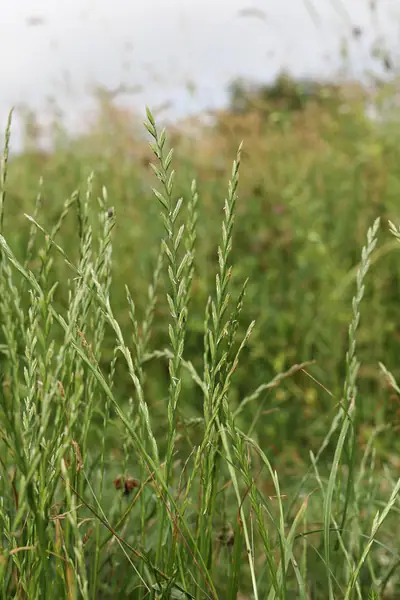
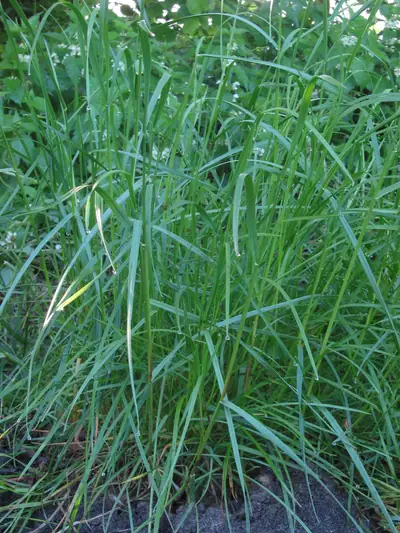


The grass of lawns, football pitches and trodden verges, with a flat spike and spikelets pressed to the axis in zigzag, one on each side. It is the most sown grass in the world and probably the most trodden without a glance.
Fields and pasture · Roadsides and waste ground · Town and roadside · Walls and rocks
Also known asEnglish ryegrass, ray grass
How to tell it
Twenty to sixty centimetres. The inflorescence is a flattened spike, not a panicle: spikelets sit directly on the axis, alternating, with their narrow face towards it. Young leaves emerge folded in half rather than rolled, and the underside shines as if varnished. It lives for years, unlike Italian ryegrass, which is taller and blonder.
What it is confused with
Darnel
Lolium temulentum
Darnel is annual, taller, and carries a long fine awn on each spikelet, which perennial ryegrass lacks. Darnel seed can carry a fungus with alkaloids, which is why wheat was separated from tares for centuries. Neither is to be gathered or tasted.
What it is for
Forage and turf, sown everywhere. No human food use.
Where it occurs
Each square is an area with recorded observations of this plant. The lighter background is the set of areas where any of the entries has been observed, and serves as a reference. Note what this is not: it is not where the plant lives, it is where people record it, so trails and towns always look fuller than the mountains. Data from GBIF.