Canadian fleabane
Erigeron canadensis
Family · Asteraceae · Harmless
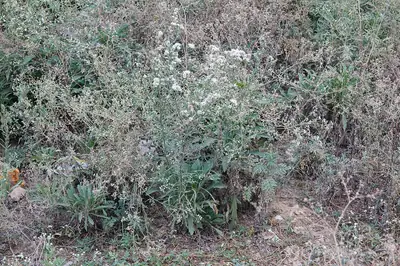
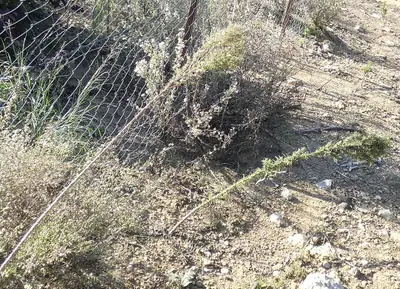


The bright green upright wand rising from any tarmac crack and making a pyramid of minute heads at the top. It was the first American plant to invade Europe, in the seventeenth century.
Town and roadside · Roadsides and waste ground · Fields and pasture · Streams and ditches
Also known ashorseweed, butterweed
How to tell it
A single, upright, bright green, almost hairless stem, with narrow toothed leaves running up close to the top. The flowers gather in a broad pyramid panicle, the main axis always above the side branches, unlike hairy fleabane. Minute heads with extremely short white rays.
What it is confused with
Flax-leaf fleabane
Erigeron bonariensis
Look at the top of the plant: on the Canadian one the main axis stands above everything, in a pyramid; on the hairy one the side branches overtop it and give a dishevelled outline. And the hairy one is grey, this is bright green.
What it is for
No use to recommend
A single plant produces over a hundred thousand seeds that fly for kilometres, and it is among the world's first species to have evolved glyphosate resistance.
Where it occurs
Each square is an area with recorded observations of this plant. The lighter background is the set of areas where any of the entries has been observed, and serves as a reference. Note what this is not: it is not where the plant lives, it is where people record it, so trails and towns always look fuller than the mountains. Data from GBIF.
Sources
Community
No approved contributions for this entry yet.
Nothing appears here without a person reading it first. Contributions do not replace the entry or its warnings: until a botanist confirms, what is written above stands.