Maidenhair spleenwort
Asplenium trichomanes
Family · Aspleniaceae · Harmless
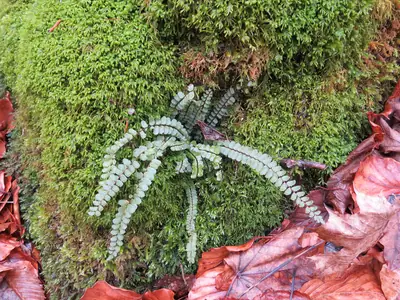
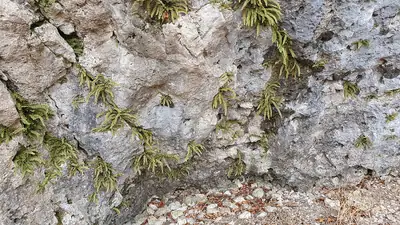


The small fern of wall cracks and shady rock, with a black glossy axis like a wire and round leaflets lined up on both sides. It is among the easiest ferns of all to identify.
Walls and rocks · Uplands · Oak woods · Streams and ditches
Also known ascommon spleenwort
How to tell it
The frond's axis is black or dark brown, hard and glossy, and persists after the leaflets fall. Small round or oval leaflets, paired along the axis. Fronds in a tuft, spreading or curved, ten to twenty centimetres.
What it is confused with
Rustyback fern
Asplenium ceterach
They live on the same wall. Rustyback has alternate lobes and an underside covered in rust-coloured scales; maidenhair spleenwort has paired leaflets and a black glossy axis.
What it is for
A traditional infusion in European folk medicine, like true maidenhair fern, with which apothecaries confused it. No food use.
With documented traditional uses. Not a therapeutic indication and not a dose.
Where it occurs
Each square is an area with recorded observations of this plant. The lighter background is the set of areas where any of the entries has been observed, and serves as a reference. Note what this is not: it is not where the plant lives, it is where people record it, so trails and towns always look fuller than the mountains. Data from GBIF.
Sources
Community
No approved contributions for this entry yet.
Nothing appears here without a person reading it first. Contributions do not replace the entry or its warnings: until a botanist confirms, what is written above stands.