Montpellier milkvetch
Astragalus monspessulanus
Family · Fabaceae · Irritating
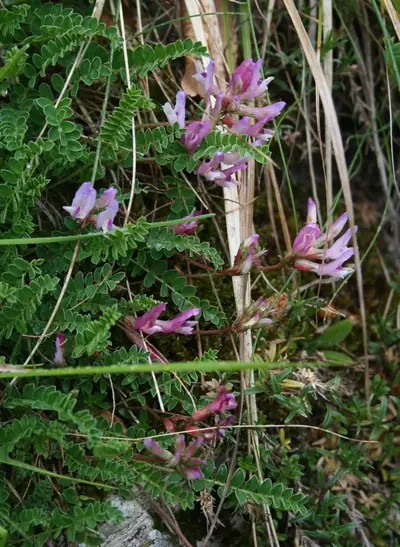
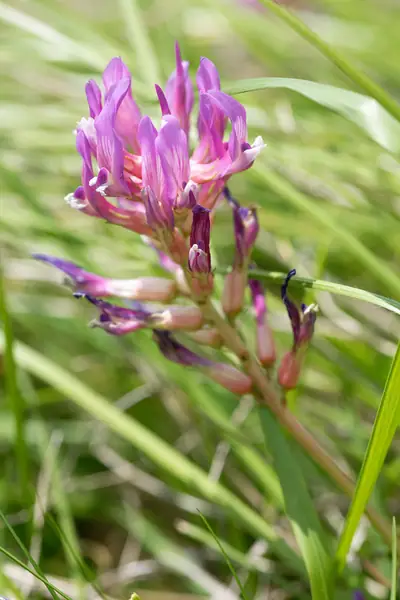


The rosette legume that opens a posy of purple or pink flowers almost at ground level, in limestone mountain meadows. The pods are long and curved like small sickles.
Uplands · Fields and pasture · Scrubland
Also known asfalse vetch
How to tell it
No apparent stem: all the leaves rise from the base, made of twenty to forty small paired leaflets. The flowers come in a dense umbel atop a stalk rising from the ground, purple, pink or rarely cream. The pods are long, curved and grooved, lying on the ground. Range: mainly a Spanish plant, practically absent from Portugal.
What it is confused with
No dangerous lookalikes known in the Iberian Peninsula.
What it is for
No use
A genus warning applies: several Astragalus accumulate selenium and alkaloids and cause severe livestock poisonings worldwide, under the name locoweed. It is not a plant to taste.
Where it occurs
Each square is an area with recorded observations of this plant. The lighter background is the set of areas where any of the entries has been observed, and serves as a reference. Note what this is not: it is not where the plant lives, it is where people record it, so trails and towns always look fuller than the mountains. Data from GBIF.
Sources
Community
No approved contributions for this entry yet.
Nothing appears here without a person reading it first. Contributions do not replace the entry or its warnings: until a botanist confirms, what is written above stands.