Birthwort
Aristolochia paucinervis
Family · Aristolochiaceae · Can kill
Read this before the sheet
This plant, or one that resembles it, is dangerous. Identifying is not authorising: no app has the authority to tell you that you may eat or touch a plant.
Emergency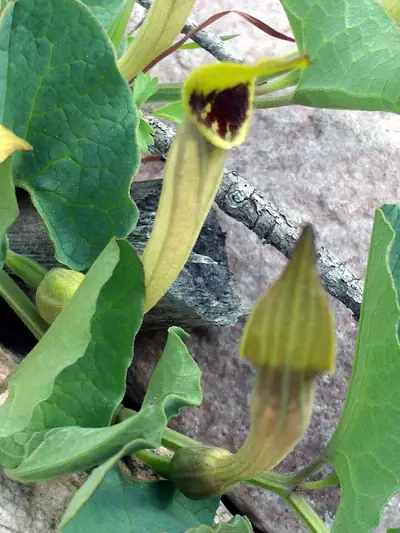
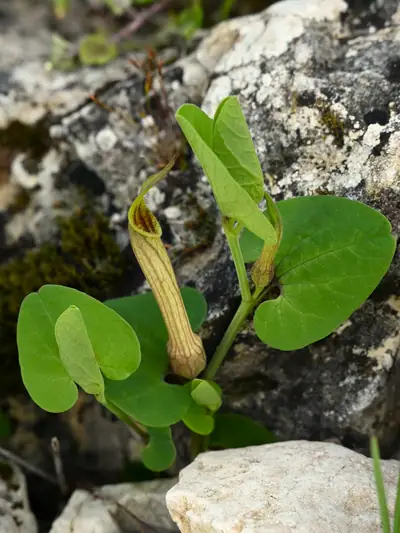


The plant with brownish yellow pipe-shaped flowers, curved and foul smelling, growing in damp shade. The whole family is carcinogenic and nephrotoxic, with no known exception.
Streams and ditches · Oak woods · Scrubland · Roadsides and waste ground
Also known asfew-veined birthwort
How to tell it
Prostrate or climbing stems with heart or kidney-shaped leaves on long stalks. The flowers are unmistakable: a tube curved like a pipe, brownish yellow or greenish, with a dark lip at the opening that traps insects inside for a night. Fruits in a hanging capsule like a small lantern.
What it is confused with
No dangerous lookalikes known in the Iberian Peninsula.
What it is for
None, and it matters to say why. It was a classical medicinal plant for two thousand years, used in childbirth, and is today banned in the European Union: aristolochic acid causes irreversible kidney failure and urinary tract cancer. A mass poisoning in the Balkans and another in Belgium confirmed it. There is no safe dose.
Where it occurs
Each square is an area with recorded observations of this plant. The lighter background is the set of areas where any of the entries has been observed, and serves as a reference. Note what this is not: it is not where the plant lives, it is where people record it, so trails and towns always look fuller than the mountains. Data from GBIF.
Sources
Community
No approved contributions for this entry yet.
Nothing appears here without a person reading it first. Contributions do not replace the entry or its warnings: until a botanist confirms, what is written above stands.