Common alder
Alnus glutinosa
Family · Betulaceae · Harmless
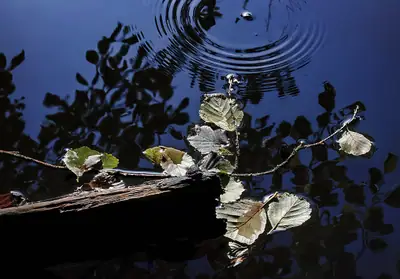


The tree that only grows with its feet in water, holding up the banks of northern rivers. Its roots fix nitrogen, which makes it a fertility factory at the water's edge.
Streams and ditches · Uplands
Also known asblack alder, European alder
How to tell it
A round leaf with a bluntly cut-off tip, sticky when young. In winter it keeps small woody cones on the branches, which no other native broadleaf has. Cut wood turns orange in air.
What it is confused with
No dangerous lookalikes known in the Iberian Peninsula.
What it is for
The wood does not rot underwater and served as piles in foundations, channels and mills. A line of alders in a valley means permanent water.
Where it occurs
Each square is an area with recorded observations of this plant. The lighter background is the set of areas where any of the entries has been observed, and serves as a reference. Note what this is not: it is not where the plant lives, it is where people record it, so trails and towns always look fuller than the mountains. Data from GBIF.
Sources
Community
No approved contributions for this entry yet.
Nothing appears here without a person reading it first. Contributions do not replace the entry or its warnings: until a botanist confirms, what is written above stands.