Silver wattle
Acacia dealbata
Family · Fabaceae · Harmless
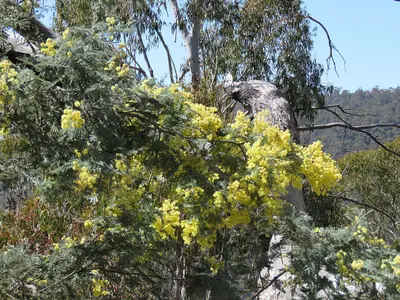
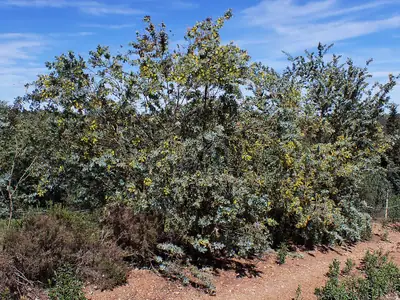


The yellow that takes over northern slopes in January, beautiful from afar and catastrophic up close. It is the country's most aggressive invader: after a fire it takes over everything in two years.
Roadsides and waste ground · Uplands · Pine woods · Streams and ditches
Also known asblue wattle, mimosa
How to tell it
Leaves divided into pairs of tiny leaflets, silvery and soft, like feathers. Thousands of scented yellow balls in late winter. Smooth greenish bark when young.
What it is confused with
No dangerous lookalikes known in the Iberian Peninsula.
What it is for
None to encourage
Its seeds stay viable in the soil for decades and germinate en masse with the heat of fire, which turns every wildfire into a wattle planting. Cutting without treating the stump multiplies it.
The law says
An invasive alien species in Portugal, with mandatory control in some areas. Do not plant, propagate or transport it with seed.
Where it occurs
Each square is an area with recorded observations of this plant. The lighter background is the set of areas where any of the entries has been observed, and serves as a reference. Note what this is not: it is not where the plant lives, it is where people record it, so trails and towns always look fuller than the mountains. Data from GBIF.
Sources
Community
No approved contributions for this entry yet.
Nothing appears here without a person reading it first. Contributions do not replace the entry or its warnings: until a botanist confirms, what is written above stands.